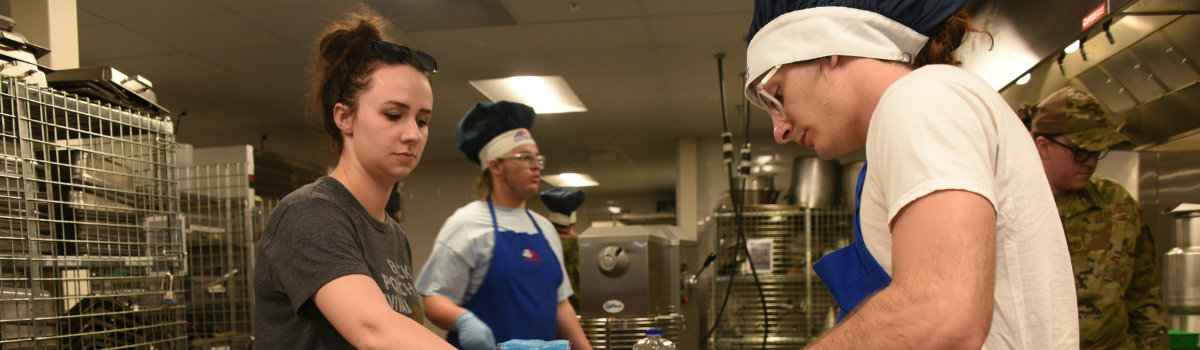
In a typical school year, a single district cafeteria worker may serve more than 30,000 meals to children who can’t always advocate for themselves about an undercooked entree or an undisclosed allergen. The stakes are high, the staff turnover can be significant, and the federal training expectations are clear. Yet too many districts still treat food safety training as a one-time onboarding event rather than a year-round operational discipline.
This guide outlines what a strong food safety training program for school cafeteria staff should cover, what USDA requires under Professional Standards, and how digital tools help directors close the gap between trained and competent.
What USDA Actually Requires
Under the Healthy, Hunger-Free Kids Act, USDA established minimum annual training hours for everyone in a school nutrition operation. Per state agency guidance like Tennessee’s Department of Education summary, the floor is:
All Directors: 12 hours of annual continuing education
All Managers: 10 hours
All other staff (20+ hours/week): 6 hours
Part-time staff (<20 hours/week): 4 hours
New directors hired on or after July 1, 2015 must also complete 8 hours of food safety training within 5 years prior to, or 30 days after, their start date. Training must be specific to the duties performed, and the SFA must track and document it – employee name, position, training title, key area, date, and hours – with supporting evidence like sign-in sheets, agendas, or certificates of completion.
These hours are not a ceiling. They are the minimum a reviewer expects to see during an Administrative Review. Districts that experience food safety incidents almost always have training records, but they do not always have evidence that the training translated into practice.
The Core Training Topics
Independent of platform or vendor, every food safety training program for school cafeteria staff should cover seven core areas.
1. Personal hygiene and health. Handwashing technique and frequency, glove changes, hair restraints, jewelry policy, fingernail standards, and the duty to report illness symptoms. Norovirus and other foodborne illness outbreaks frequently trace back to ill workers handling food. The reporting agreement is required by the FDA Food Code and should be signed annually.
2. Time and temperature control (TCS). Receiving temperatures, cold and hot holding thresholds (41 degrees F or below, 135 degrees F or above), cooking final temperatures by food type, two-stage cooling (135 to 70 in 2 hours, 70 to 41 in 4 hours), and proper reheating. Staff should be able to verbalize, not just locate, the key numbers.
3. Cross-contamination and cross-contact. Color-coded cutting boards and utensils, allergen-dedicated equipment, separation of raw and ready-to-eat foods in storage, and sanitizing procedures for shared surfaces. Cross-contact (allergens) is distinct from cross-contamination (pathogens) and must be trained separately.
4. Allergen awareness. The Big Nine allergens (milk, eggs, fish, shellfish, tree nuts, peanuts, wheat, soybeans, and sesame), how to read labels and product specifications, how to communicate with students and parents, and what to do when a substitution is required. Sesame became the ninth major allergen with the FASTER Act effective January 2023; many districts have still not updated training materials.
5. Cleaning and sanitizing. Three-compartment sink procedure, dish machine temperature and sanitizer verification, sanitizer concentration testing (test strips), surface cleaning frequency, and proper chemical storage. Staff should be able to demonstrate, not just describe, sanitizer testing.
6. HACCP and standardized operating procedures. Schools operate under a HACCP-based food safety plan required by USDA. Staff need to know which SOPs apply to their station, where to find them, and how to document completion. New employees should be walked through the SOP binder during onboarding.
7. Recordkeeping and corrective action. Temperature logs, receiving logs, equipment temperature checks, and what to do when something falls out of range. A temperature log with no corrective action documented is a finding waiting to happen during an Administrative Review.
Why One-Time Training Doesn’t Stick
The most common pattern in K-12 food service is a classroom-style annual training, often delivered before students return in August, followed by little reinforcement until the next August. Research on food handler training consistently shows that recall of specific procedures drops sharply within 90 days when there is no on-the-job reinforcement.
Districts that consistently pass food safety inspections and Administrative Reviews share three habits:
Short, role-specific reinforcement modules delivered monthly or quarterly
On-the-job observation by managers with documented coaching
Immediate corrective action and re-training when a finding occurs
This is harder to do with paper-only training records spread across schools.
Where Digital Training and Inspections Help
Digital food safety platforms have made several things meaningfully easier for K-12 directors:
Centralized training records that aggregate hours by employee, role, and key area across all schools in the district
Mobile delivery of short, role-specific lessons that can be assigned and completed during the school day
Digital temperature logs and SOP checklists that prompt corrective action when readings fall out of range
Photo-evidence inspections that managers can complete on the line, with findings auto-routed to corrective action
The combination matters. Training without observation drifts. Observation without training records frustrates reviewers. A digital system ties the two together so that when an Administrative Reviewer asks, “Can you show me Maria’s training hours and the temperature logs from the day she worked the grill?”, the answer is one search, not one binder per building.
Inspection platforms like InspectU help K-12 nutrition programs standardize daily food safety checks, temperature logs, and training documentation across schools so directors can see the full picture from one dashboard.
Putting It Together
Strong cafeteria food safety training is not about a single August event. It is about teaching the right topics, documenting the hours, observing the work, and correcting in real time when something drifts. Districts that build training around those four habits hand reviewers a clean program, but more importantly, they protect the children eating their meals.
The hour requirements are the floor. The competence is what counts.